
1.Introduction
The Stranding Machine is one of the most important stages in wire and cable manufacturing. By twisting multiple conductors together in a controlled manner, manufacturers can significantly improve the flexibility, mechanical strength, electrical performance, and reliability of the finished cable. Different cable structures and production requirements require different types of Stranding Machines, making equipment selection a key factor in production efficiency and product quality.
This guide introduces the major categories of wire and cable stranding machines, explains their working principles, compares their applications, and provides practical guidance for selecting the right equipment.
2.Definition of Stranding Machine
2.1 A Stranding Machine is used to twist two or more wires together according to a specified lay length.
2.2 Depending on the cable design, the conductors may be bare copper, aluminum, steel wire, insulated cores, or other special materials.
2.3 The primary objectives of stranding include: improving cable flexibility, increasing mechanical strength, enhancing electrical performance, reducing conductor stress during installation, producing stable cable structures for different applications.
2.4 Although many machine designs exist, stranding equipment can generally be classified according to the movement of the pay-off system.
3.Three Main Categories of Stranding Machines
3.1 Rotating Pay-off Spool Type
In this design, the pay-off bobbins rotate together with the machine body around the central axis. The entire cage or frame carries the reels during operation, ensuring stable wire feeding for heavy conductors.
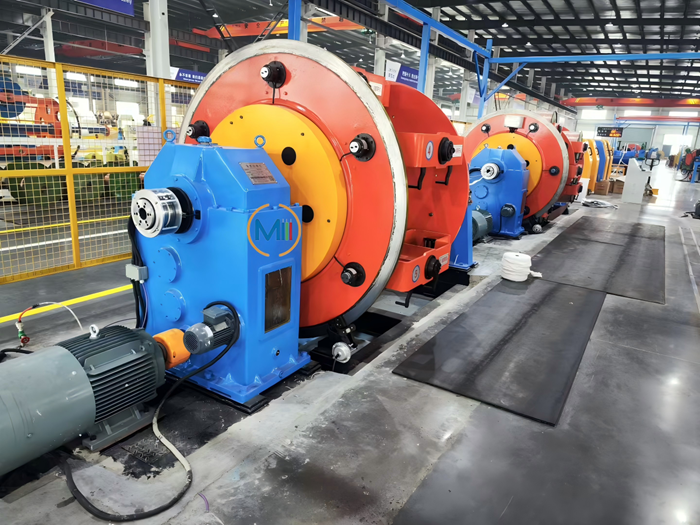
3.1.1 Cage Stranding Machine
(1) The Cage Stranding Machine is designed for large and heavy cable production. Each bobbin is mounted inside a rotating cage, allowing stable operation even when processing large-diameter conductors.
(2) Its advantages include: suitable for heavy bobbins, excellent stability during operation, capable of handling large conductor cross-sections, high reliability for continuous production.
(3) Typical applications include: High-voltage power cables, Medium-voltage cables
Submarine cables, Large insulated cable cores.
(4) Because of its robust construction, the cage strander is often selected by manufacturers producing high-end power cables with large conductor sizes.
3.1.2 Rigid Frame Stranding Machine
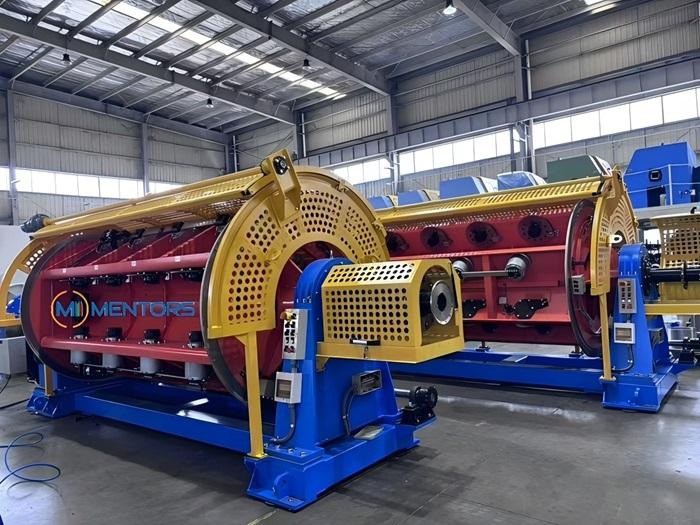
(1) Unlike the cage strander, the Rigid Frame Stranding Machine uses a rigid rotating frame to carry the bobbins. The machine offers excellent mechanical strength and is especially suitable for bare conductors with very large cross-sections.
(2) Key features include: Heavy-duty structure, Excellent rigidity, Stable operation at high loads, Suitable for extra-large conductors.
(3) Typical products include: Bare aluminum conductors, ACSR conductors, Large overhead transmission conductors, Steel reinforced conductors.
(4) Rigid frame stranders are widely used in power transmission projects where conductor size and mechanical strength are critical.
3.1.3 Cradle Stranding Machine
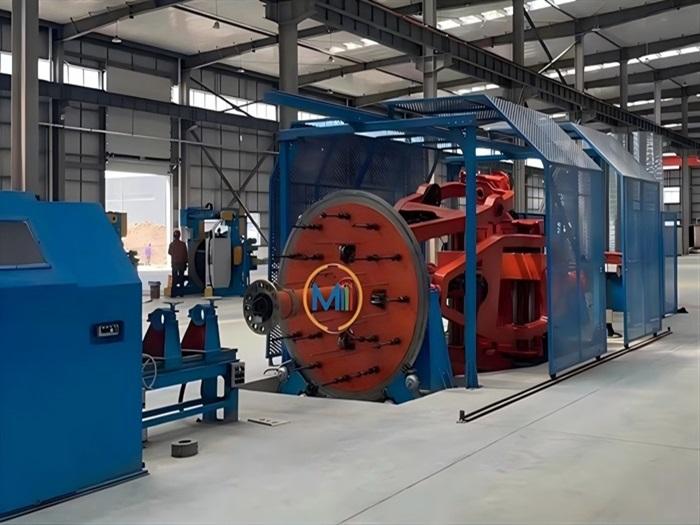
(1) The Cradle Stranding Machine combines stable operation with higher production efficiency than traditional cage stranders. The bobbins are supported by cradle-type holders that reduce vibration and improve productivity.
(2) Typical applications include: Power cables, Control cables, Medium and large insulated conductors.
(3) It provides a good balance between production speed, cable quality, and machine investment.
3.2 Fixed Pay-off Reel with Rotating Guide System
3.2.1 Tubular Stranding Machine
(1) A Tubular Stranding Machine feeds wire from stationary bobbins positioned inside a rotating tube. As the tube rotates, the conductors are stranded together.
(2) This design offers several advantages: Very high rotational speed, Compact machine structure, Smooth wire path, High production efficiency
(3) Unlike many other stranders, tubular machines usually do not include a back-twist mechanism. Therefore, they are mainly used for conductors that are less sensitive to torsional stress.
(4) Typical products include: Steel wire ropes, Steel strands, Overhead conductors, Hard metal wires.
(5) Because of their high speed and excellent productivity, tubular stranders are commonly used in industries requiring large production volumes of steel-based products.
3.3 Rotating Take-up Type
3.3.1 Single Twist Stranding Machine
(1) A Single Twist Machine produces one twist during each revolution of the rotating bow.
(2) Its major advantages include: High precision, Stable cable quality, Low conductor damage, Excellent lay consistency.
(3) Typical applications include: Automotive wires, Data cables, Communication cables, Electronic cables, Instrumentation cables.
(4) Manufacturers producing premium cables often choose single twist machines because of their excellent product consistency and low scrap rate.
3.3.2 Double Twist Bunching Machine
(1) The Double Twist Bunching Machine generates two twists during each revolution, effectively doubling production efficiency compared with a single twist design.
(2) Its benefits include: Extremely high production speed, Low operating cost, Compact equipment footprint, Continuous production capability.
(3) Typical applications include: Building wires, Flexible copper conductors, Bare copper bunching, Household electrical wires.
(4) Because of its outstanding productivity and attractive investment cost, the double twist buncher is one of the most widely used machines in modern cable factories.
4.How to Choose the Right Stranding Machine
4.1 Selecting the appropriate Stranding Machine depends on several important factors rather than simply choosing the fastest equipment.
4.2 Manufacturers should consider: Conductor material (copper, aluminum, steel, or alloy), Conductor diameter, Cable construction, Production capacity, Required cable quality, Future expansion plans, Investment budget.
4.3 For example, manufacturers producing flexible building wires generally benefit from high-speed double twist bunching machines. Companies manufacturing automotive cables or communication cables often require the higher precision of single twist machines. Heavy power cable manufacturers usually select cage or cradle stranders, while rigid frame stranders are preferred for extra-large bare conductors. Tubular stranders remain the best choice for steel wire ropes and other hard-wire products.
4.4 Matching equipment to the production application not only improves product quality but also reduces maintenance costs and increases long-term productivity.
5.Conclusion
Stranding Machine continues to play a critical role in modern wire and cable manufacturing. Each type of stranding machine is designed for specific conductor materials, cable structures, and production requirements.
Understanding the differences between these machine types enables manufacturers to make informed investment decisions, improve production efficiency, and deliver high-quality cable products that meet the demands of today’s global market.
Whether producing building wires, automotive cables, overhead conductors, submarine cables, or high-voltage transmission lines, selecting the right stranding equipment is the foundation of reliable and efficient cable manufacturing.
Click here to see the running video of Stranding Machine
NOTE:All rights reserved, Reprinting is prohibited without permission.